My teaching philosophy has been shaped from the content I have learnt throughout my studies and further cemented as a result of experiencing placements as seeing which of the theories get incorporated into my teaching.
I strongly believe that to be an effective teacher it is pivotal to understand that teaching is more than just one theory. I believe you need to incorporate more than one learning theory into your practice in order to accommodate for all students and offer a variety of learning experiences.
The theories that I keep at the core of my practice are as follows.
The socio-cognitive theory is one theory I believe is pivotal to teaching. Every student is different, comes from a different background with different beliefs and learn differently. While there are certain that need to be taught in certain ways, I believe it crucial to let students learn in ways that they find beneficial, particularly in the senior grades as their futures rests on their marks. I think it is important to note though that only works if the students actually do their work. This theory recognises the diversity in students as well as that their learning environment (peers, teacher, structure) affect their learning and how they participate. efficacy is so crucial in allowing students to be more involved in their learning and express their knowledge. Self-efficacy refers to an individual’s belief in his or her capacity to execute behaviors necessary to produce specific performance attainments (Bandura, 1977, 1986,1997). Therefore this method can be immensely beneficial but only when the students have confidence and also want to learn. If a student is confident this will show through their work. This also allows teachers to see which students are struggling and focus more on these students.
The constructivist theory is another that I love to incorporate in my practice. I think it is crucial that the students are active participants in their learning. Much like having self-efficacy, I think it is very beneficial that students learning is self-regulated, particularly in the more senior years. Students need to learn off of each other in order to be exposed to different and new ideas. Therefore incorporating activities such as group tasks and think-pair-share are very useful. This theory allows students to make connections between content and life which often makes harder concepts easier for students to remember. ‘The underlying concept within the constructivism learning theory is the role which experiences-or connections with the adjoining atmosphere-play in student education.The constructivism
learning theory argues that people produce knowledge and form meaning based upon their experiences.’ (Driscoll, 2000)
The humanist approach I also love because it puts the student at the centre of their learning. For most student this is beneficial as they can focus and recognise what they need to work on.
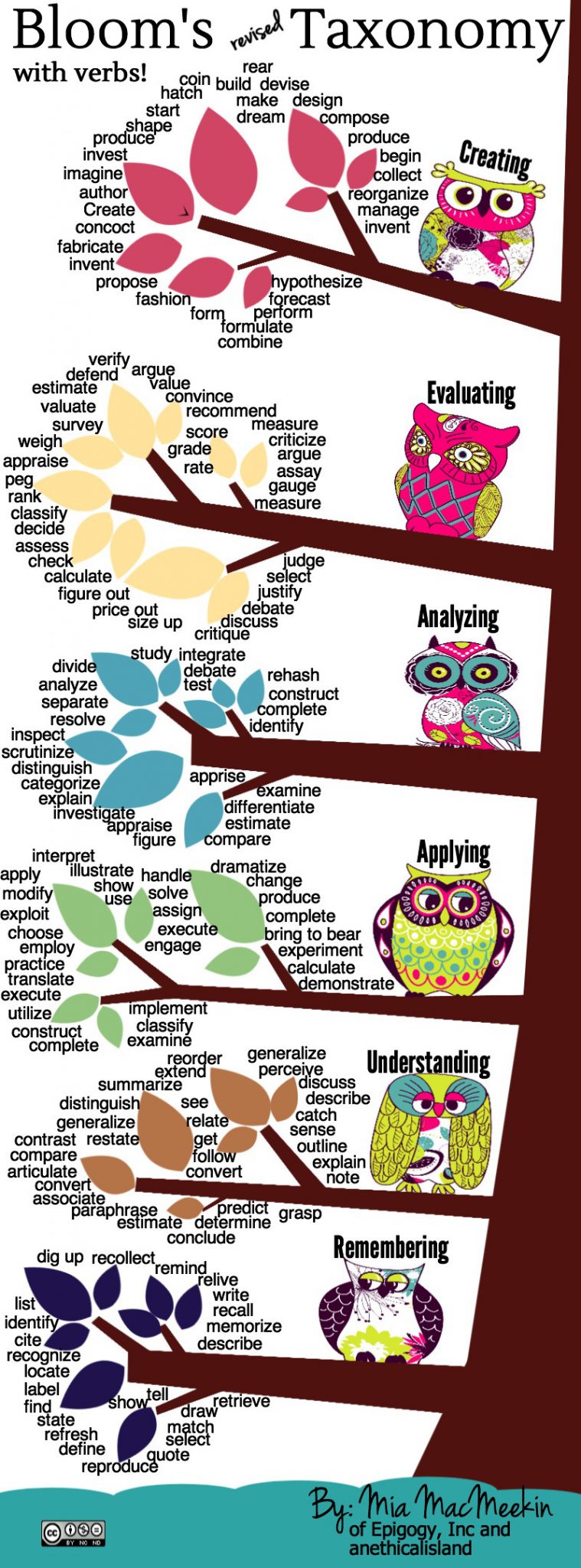
I also think it is pivotal to incorporate Bloom’s taxonomy throughout the entire learning process as it allows all types of learners to succeed.